![Playa de Papagayo, Lanzarote, Canary Islands, Spain. [Image Lviatour/Wikimedia]](https://staticr1.blastingcdn.com/media/photogallery/2018/12/3/660x290/b_502x220x82/playa-de-papagayo-lanzarote-canary-islands-spain-image-lviatourwikimedia_2157229.jpg "Playa de Papagayo, Lanzarote, Canary Islands, Spain. [Image Lviatour/Wikimedia]")
With its stark, volcanic scenery, Lanzarote has a different kind of beauty. The island is one of Spain’s Canary Islands and sits off the coast of West Africa. Lanzarote is famous for its year-round warm climate, beaches and landscapes. There are several beach resorts around the island and many attractions related to the volcanic nature of the island.
Here we visit El Diablo, a restaurant that uses a dormant volcano to cook food. We also visit a nightclub, restaurant, bar and pool inside a volcanic tube, a Mars-like landscape that inspired NASA to use it to train their astronauts, a bright green lagoon and the home of famous Spanish artist César Manrique, built into lava bubbles on the island.
El Diablo Restaurant – Lanzarote
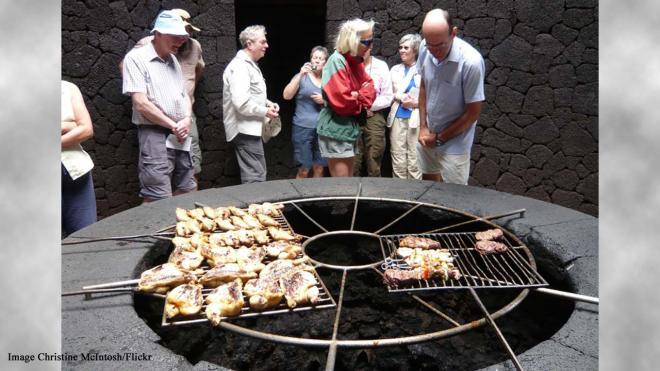
Anyone who enjoys a good barbecue will appreciate El Diablo. The restaurant is built over a natural heat source – a volcano. A giant grill has been placed over the opening to the volcano, just six feet above the bubbling lava, which they say is 400 degrees Celsius, or 752 degrees Fahrenheit and is the ideal temperature for grilling meat. The volcano has been dormant since 1824, so hopefully a meal at El Diablo will go by with nothing going wrong!
Los Jameos del Agua - Lanzarote
“Los Jameos del Agua” was created in a collapsed section of a volcanic tube and is reportedly the largest submerged volcanic tunnel in the world. Spanish artist César Manrique turned it into a nightclub and underground pool in the 1960s. There is even a concert hall and restaurant and bar built into the tunnel. The cave system displays stalactites and stalagmites and is home to a unique species of blind white crab that have adapted to the tunnel's darkness.
Timanfaya National Park - Lanzarote
You would be forgiven for thinking you’ve landed on another planet when you visit here. Located in the southwest of Lanzarote, the Timanfaya National Park has been declared a World Biosphere Reserve by UNESCO for several rare plant species growing there. Back in the 1700s more than 100 volcanoes erupted on the island, leaving this desolate landscape. NASA took note of the park and used it for training astronauts before the Apollo 17 expedition to the moon.
Green Lagoon - Yaiza, Lanzarote
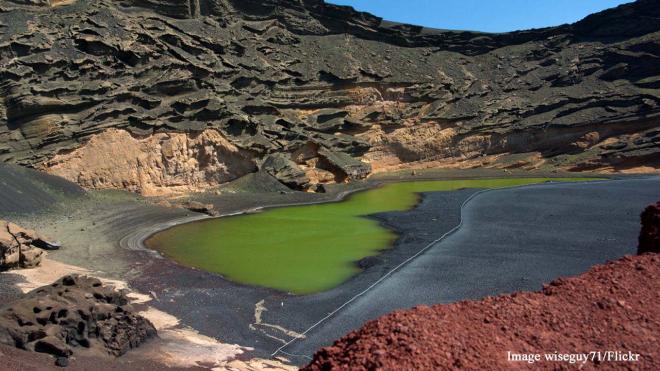
This bright green lagoon is located on an ancient volcano and sits among black volcanic terrain. It reportedly was caused by ocean water being trapped in the crater from a nearby black sand beach beneath the volcano. The water turned green due to a mixture of algae and sulfur in the water. Swimming is not allowed due to it being a protected area and you probably wouldn’t want to anyway. The lagoon is close to the Timanfaya National Park.
César Manrique Foundation – Lanzarote
Spanish artist César Manrique ensured his island home would keep a balance with its surrounding ecology. There are no high-rise hotels on the island and they all had to keep to the local traditions. His art can be seen everywhere on the island, including the place that was originally his home. Manrique built the house within lava bubbles on a volcanic lava field in 1968. Sadly he died in a road accident in 1992.

